How to Test Water Quality: A Complete Guide to Checking Your Water at Home

how to test water quality

Clear tap water isn’t always clean water. While municipal treatment plants regulate dozens of contaminants, aging service pipes, agricultural runoff, and household plumbing can introduce lead, PFAS (“forever chemicals”), chlorine byproducts, and hard minerals into your glass right before you drink it. If your home relies on a private well, testing is entirely up to you.

Learning how to test water quality at home takes less than 15 minutes and gives you an exact blueprint of what is flowing through your faucets. Below is a step-by-step guide to choosing the right testing method, running an accurate water test, and understanding what your results actually mean.

4 Signs You Should Test Your Water Immediately

Even if you test your water annually, certain warning signs indicate an immediate change in your water chemistry:

  • Unusual Odors: A “rotten egg” smell points to hydrogen sulfide gas or sulfur bacteria; a strong bleach odor signals excess municipal chlorine.
  • Metallic, Bitter, or Salty Taste: A metallic tang often indicates elevated iron, copper, or lead leaching from corroded pipes.
  • Visible Staining or Cloudiness: Chalky white buildup on faucets and showerheads signals hard water (calcium and magnesium), while reddish-brown or blue-green stains point to iron or acidic water corroding copper plumbing.
  • Recent Local Events: Always test your water after nearby flooding, heavy agricultural spraying, septic system repairs, or replacing household plumbing lines.

4 Ways to Test Your Water Quality (Compared)

Not all water tests measure the same contaminants. Depending on your budget and concerns, you can combine quick screening tools with in-depth laboratory analysis.

Testing Method

Cost Range

Time to Results

What It Measures Best

Accuracy Level

DIY Test Strips & Color Kits

$15 – $40

1 – 10 minutes

pH, hardness, chlorine, iron, copper, nitrates

Moderate (Good for quick screening)

Digital TDS & EC Meters

$12 – $35

5 seconds

Total Dissolved Solids (minerals, salts, metals)

Moderate (Measures quantity, not toxicity)

Certified Mail-In Lab Kits

$50 – $300+

5 – 10 business days

Lead, arsenic, VOCs, PFAS, coliform bacteria, pesticides

Highest (EPA-certified precision)

Consumer Confidence Report (CCR)

Free

Instant

Municipal water source data & city-wide compliance

High (Does not reflect your home’s pipes)

1. At-Home Water Test Strips & Liquid Drop Kits

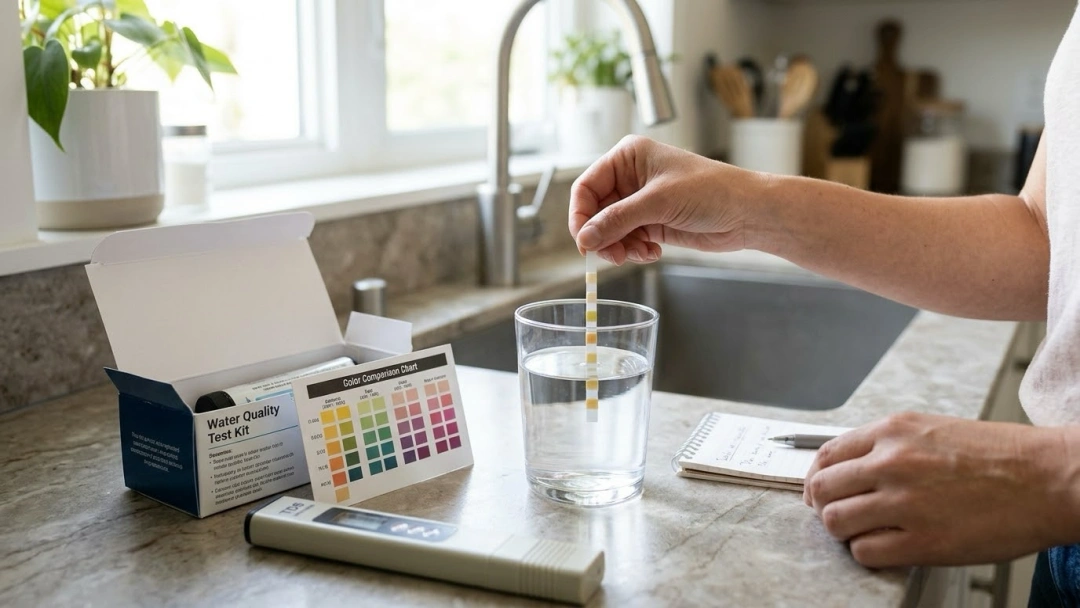
Similar to pool test strips, drinking water test strips contain chemical pads that change color when dipped into a water sample. They are an inexpensive way to check basic parameters like water hardness, pH, free chlorine, iron, and nitrates. Liquid reagent drop kits (titration kits) take a few minutes longer but offer slightly sharper color accuracy than paper strips.

2. Digital TDS (Total Dissolved Solids) Meters

A digital TDS meter measures the electrical conductivity of your water to estimate the concentration of dissolved ions in parts per million (ppm).

  • Important limitation: A TDS meter is essential for checking the performance of a Reverse Osmosis (RO) system, but it is not a safety test. Beneficial minerals like calcium and magnesium raise TDS readings, while dangerous neurotoxins like lead (at 15 parts per billion) or E. coli bacteria will not register on a basic TDS meter at all.

3. Certified Laboratory Mail-In Kits

If you suspect lead, heavy metals, agricultural pesticides, PFAS, or bacteria, mail-in laboratory kits (such as Tap Score, State Extension Labs, or EPA-certified testing facilities) are the gold standard. You collect samples at your kitchen sink and ship them overnight with an ice pack to an accredited lab using inductively coupled plasma mass spectrometry (ICP-MS).

4. Your Local Consumer Confidence Report (CCR)

If you are on city water in the United States, your water utility is legally required by the EPA to publish an annual Water Quality Report (CCR) every July 1st. You can look it up online by zip code to see baseline levels of disinfectants, haloacetic acids, and trace minerals in your neighborhood supply before the water reaches your property line.

Step-by-Step: How to Test Water Quality at Home Accurately

Whether you are using an at-home strip kit or collecting a sample for a certified lab, following proper sampling protocol prevents false readings.

Step 1: Decide Between “First-Draw” and “Flushed” Sampling

  • First-Draw Sample (Best for Lead & Copper): Let your cold water sit undisturbed in the pipes for at least 6 to 8 hours (overnight is ideal). Collect the very first water that comes out of the faucet. This reveals whether your home’s indoor plumbing and solder are leaching metals into standing water.
  • Flushed Sample (Best for Well Water & City Supply): Run the cold water tap at full flow for 2 to 3 minutes before collecting your sample. This clears out stagnant pipe water so you can test the actual water coming from your well aquifer or city main.

Step 2: Prepare the Faucet

  1. Always use the cold water tap—hot water dissolves more metals from inside your water heater tank and skews test results.
  2. Unscrew and remove the faucet aerator (the small mesh screen at the tip of the spout) if you are testing for bacteria or particulates, and wipe the spout clean with an alcohol pad.

Step 3: Collect and Test the Sample

  • For Test Strips: Fill a clean glass cup with cold water. Dip the test strip into the water for the exact number of seconds specified in the manual (usually 2–5 seconds). Remove the strip, shake off excess fluid gently, lay it flat horizontally, and match the pads to the color chart at the exact time interval (waiting too long causes colors to bleed and overreport levels).
  • For Bacteria & Lab Vials: Wash your hands thoroughly. Never touch the inside of the sample bottle cap or rim. Fill the vials to the designated fill line, cap tightly, and place them in the insulated return mailer immediately.

How to Read Your Water Quality Test Results

Once you have your numbers, compare them against the EPA Maximum Contaminant Levels (MCLs) and Secondary Drinking Water Standards below:

Water ParameterIdeal / Safe RangeEPA Threshold / LimitWhat High Levels Mean
pH Level6.5 – 8.5<6.5 or >8.5Below 6.5 is acidic (corrodes pipes); above 8.5 tastes bitter/alkaline
TDS (Total Dissolved Solids)50 – 250 ppm500 ppm (Secondary limit)Above 500 ppm leaves scale deposits and tastes mineral-heavy
Water Hardness0 – 60 mg/L>120 mg/LSoap won’t lather; white scale clogs water heaters and ice makers
Free Chlorine0.2 – 2.0 mg/L (ppm)4.0 mg/L (MRDL)Strong swimming-pool odor and dry skin/hair
Lead0 ppb15 ppb (0.015 mg/L Action Level)Neurotoxic heavy metal; requires immediate NSF-53 or RO filtration
Nitrates (as Nitrogen)<2 mg/L (ppm)10 mg/L (ppm)Fertilizer or septic runoff; hazardous for infants and pregnant women
Iron<0.1 mg/L (ppm)0.3 mg/L (Secondary limit)Metallic taste and rusty orange stains on laundry and porcelain
Coliform Bacteria / E. coli0 CFU/100 mL (Absent)0 (Any presence fails)Fecal or surface contamination; requires shock chlorination or UV sterilization

What to Do If Your Water Test Reveals Problems

Matching the right water treatment technology to your specific test result saves you from buying unnecessary equipment:

  1. High Chlorine, Bad Taste, or Odors: Install an Activated Carbon Block Filter (pitcher, faucet mount, or under-sink system) certified to NSF/ANSI Standard 42.
  2. High TDS, Lead, Fluoride, Nitrates, or PFAS: Upgrade to a Reverse Osmosis (RO) System or an advanced NSF/ANSI 53 & 58 certified point-of-use filter. RO membranes push water through a 0.0001\text{-micron} barrier, stripping out up to 99% of dissolved metals and chemical contaminants.
  3. Hard Water (High Calcium & Magnesium): Install a whole-house Ion Exchange Water Softener to protect your water heater, dishwasher, and plumbing from scale buildup.
  4. Positive for Bacteria or Viruses (Well Water): Disinfect the well via shock chlorination and install a Whole-House UV-C (Ultraviolet) Water Purifier rated to neutralize 99.99% of waterborne microorganisms.

Frequently Asked Questions (FAQ)

How often should you test your home water quality?

If you use municipal tap water, testing once every 1 to 2 years (or whenever pipes are disturbed or taste changes) is sufficient. If your home uses a private well, the EPA and CDC recommend testing at least once every year for total coliform bacteria, nitrates, TDS, and pH, plus a comprehensive heavy metal and VOC screening every 3 to 5 years.

Can I get my water tested for free?

Be cautious of “free in-home water tests” offered by door-to-door water softener salespeople; these demonstrations usually rely on dramatic precipitation tricks designed to sell expensive whole-house systems. However, many county health departments offer free or low-cost ($15–$30) bacteria and lead testing for households with infants, pregnant women, or private wells.

Is a TDS reading of 200 ppm safe to drink?

Yes. According to the World Health Organization (WHO) and the EPA, a TDS reading between 50 and 300 ppm is considered normal and palatable for tap and mineral water. However, because TDS only measures the total weight of dissolved minerals and salts, it cannot tell you whether trace amounts of lead, pesticides, or bacteria are present.

Why did my water test strip turn a color that isn’t on the chart?

An off-chart color usually happens for one of three reasons: the strip expired or was exposed to humidity in an unsealed bottle, you waited too long to read the strip (colors continue oxidizing after 60 seconds), or extremely high chlorine levels bleached out the pH or alkalinity reagent pad.

Take the Guesswork Out of Your Hydration

Knowing how to test water quality puts you in complete control of what your family drinks and cooks with every day. Start with an affordable multi-parameter test strip kit or a certified mail-in lab test, identify the exact contaminants in your supply, and pair your kitchen with a targeted filtration system.

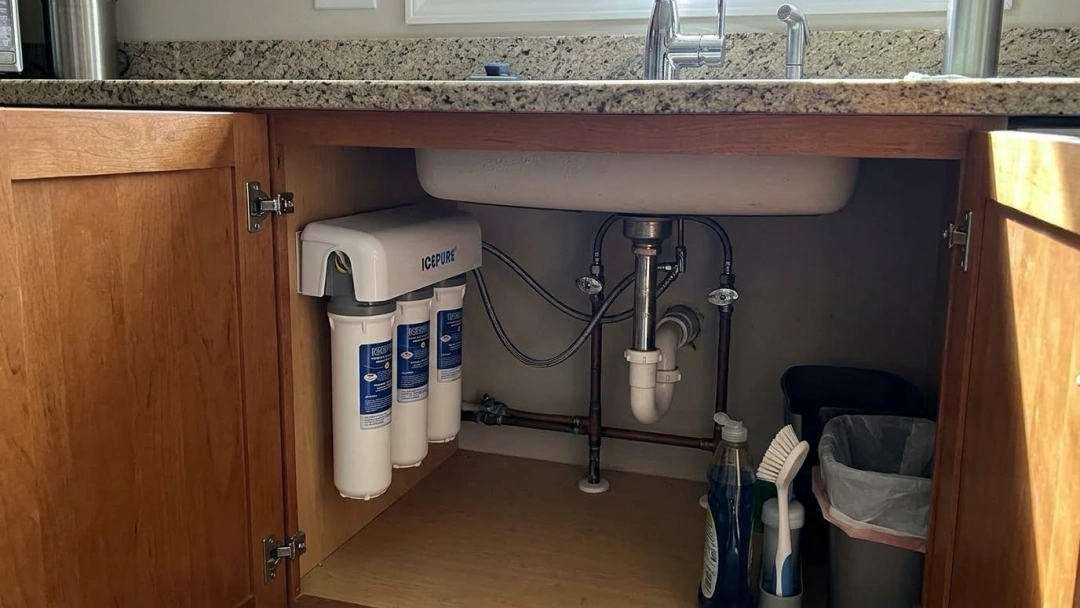
Looking for cleaner, crisper water at the push of a button? Browse our Certified Water Filters, RO Systems & Water Dispensers to upgrade your home hydration today!

👉  Water Cooler Dispensers

👉  Reverse Osmosis Systems

👉  Replacement Water Filters